XiSun的博客

Learning is endless

0%

KafkaConsumer 源码之 consumer 的 offset commit 机制和 partition 分配机制

紧接着上篇文章,这篇文章讲述 consumer 提供的 offset commit 机制和 partition 分配机制,具体如何使用是需要用户结合具体的场景进行选择,本文讲述一下其底层实现。

自动 offset commit 机制

1
2
3
4
// 自动提交,默认true
props.put("enable.auto.commit", "true");
// 设置自动每1s提交一次,默认为5s
props.put("auto.commit.interval.ms", "1000");

通过上面设置,启动自动提交 offset 以及设置自动提交间隔时间。

手动 offset commit 机制

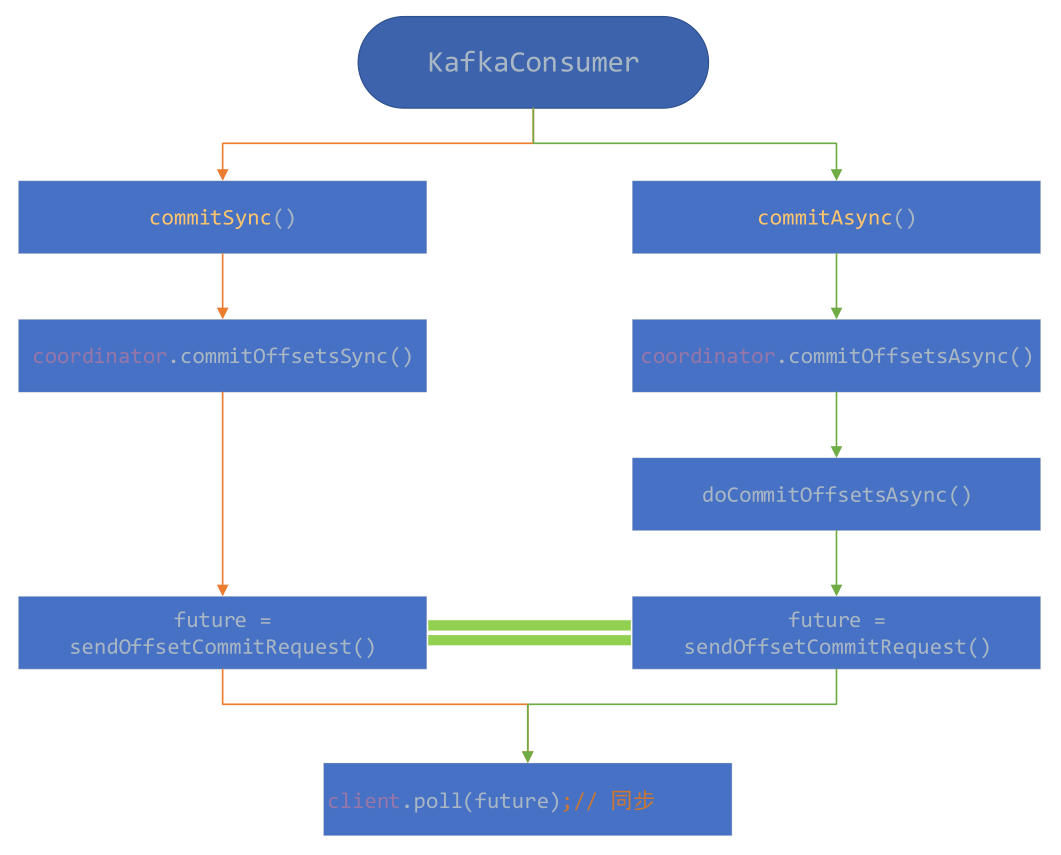
先看下两种不同的手动 offset commit 机制,一种是同步 commit,一种是异步 commit,既然其作用都是 offset commit,应该不难猜到它们底层使用接口都是一样的,其调用流程如下图所示:

image-20201124154403249

同步 commit

1
2
3
4
5
6
7
// 对poll()中返回的所有topics和partition列表进行commit
// 这个方法只能将offset提交Kafka中,Kafka将会在每次rebalance之后的第一次拉取或启动时使用同步commit
// 这是同步commit,它将会阻塞进程,直到commit成功或者遇到一些错误
public void commitSync() {}

// 只对指定的topic-partition列表进行commit
public void commitSync(final Map<TopicPartition, OffsetAndMetadata> offsets) {}

其实,从上图中,就已经可以看出,同步 commit 的实现方式,client.poll () 方法会阻塞直到这个 request 完成或超时才会返回。

异步 commit

1
2
3
4
5
public void commitAsync() {}

public void commitAsync(OffsetCommitCallback callback) {}

public void commitAsync(final Map<TopicPartition, OffsetAndMetadata> offsets, OffsetCommitCallback callback) {}

对于异步的 commit,最后调用的都是 doCommitOffsetsAsync () 方法,其具体实现如下:

1
2
3
4
5
6
7
8
9
10
11
12
13
14
15
16
17
18
19
20
21
22
23
24
25
26
27
28
private void doCommitOffsetsAsync(final Map<TopicPartition, OffsetAndMetadata> offsets, final OffsetCommitCallback callback) {
// 发送offset-commit请求
RequestFuture<Void> future = sendOffsetCommitRequest(offsets);
final OffsetCommitCallback cb = callback == null ? defaultOffsetCommitCallback : callback;
future.addListener(new RequestFutureListener<Void>() {
@Override
public void onSuccess(Void value) {
if (interceptors != null)
interceptors.onCommit(offsets);
// 添加成功的请求,以唤醒相应的回调函数
completedOffsetCommits.add(new OffsetCommitCompletion(cb, offsets, null));
}

@Override
public void onFailure(RuntimeException e) {
Exception commitException = e;

if (e instanceof RetriableException) {
commitException = new RetriableCommitFailedException(e);
}
// 添加失败的请求,以唤醒相应的回调函数
completedOffsetCommits.add(new OffsetCommitCompletion(cb, offsets, commitException));
if (commitException instanceof FencedInstanceIdException) {
asyncCommitFenced.set(true);
}
}
});
}

在异步 commit 中,可以添加相应的回调函数,如果 request 处理成功或处理失败,ConsumerCoordinator 会通过 invokeCompletedOffsetCommitCallbacks () 方法唤醒相应的回调函数。

上面简单的介绍了同步 commit 和异步 commit,更详细的分析参考:Kafka consumer 的 offset 的提交方式

注意:手动 commit 时,提交的是下一次要读取的 offset。举例如下:

1
2
3
4
5
6
7
8
9
10
11
12
13
14
15
16
17
18
19
20
try {
while(running) {
// 取得消息
ConsumerRecords<String, String> records = consumer.poll(Long.MAX_VALUE);
// 根据分区来遍历数据
for (TopicPartition partition : records.partitions()) {
List<ConsumerRecord<String, String>> partitionRecords = records.records(partition);
// 数据处理
for (ConsumerRecord<String, String> record : partitionRecords) {
System.out.println(record.offset() + ": " + record.value());
}
// 取得当前读取到的最后一条记录的offset
long lastOffset = partitionRecords.get(partitionRecords.size() - 1).offset();
// 提交offset,记得要 + 1
consumer.commitSync(Collections.singletonMap(partition, new OffsetAndMetadata(lastOffset + 1)));
}
}
} finally {
consumer.close();
}

commit offset 请求的处理

当 Kafka Server 端接收到来自 client 端的 offset commit 请求时,对于提交的 offset,GroupCoordinator 会记录在 GroupMetadata 对象中,至于其实现的逻辑细节,此处不再赘述。

partition 分配机制

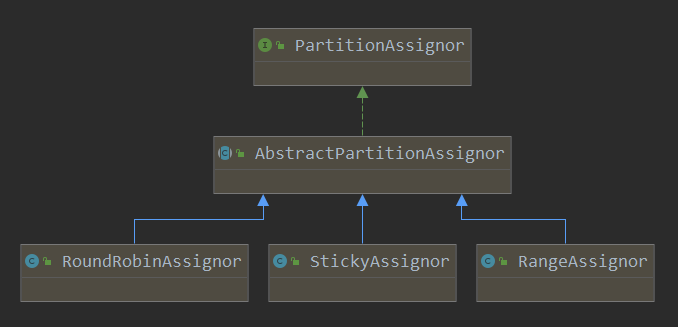
consumer 提供了三种不同的 partition 分配策略,可以通过 partition.assignment.strategy 参数进行配置,默认情况下使用的是 org.apache.kafka.clients.consumer.RangeAssignor,Kafka 中提供了另外两种 partition 的分配策略 org.apache.kafka.clients.consumer.RoundRobinAssignororg.apache.kafka.clients.consumer.StickyAssignor,它们关系如下图所示:

image-20201124162306959

通过上图可以看出,用户可以自定义相应的 partition 分配机制,只需要继承这个 AbstractPartitionAssignor 抽象类即可。

partition 分配策略,其实也就是 reblance 策略。

AbstractPartitionAssignor

AbstractPartitionAssignor 有一个抽象方法,如下所示:

1
2
3
4
5
6
7
8
9
10
/**
* Perform the group assignment given the partition counts and member subscriptions
* @param partitionsPerTopic The number of partitions for each subscribed topic. Topics not in metadata will be excluded
* from this map.
* @param subscriptions Map from the memberId to their respective topic subscription
* @return Map from each member to the list of partitions assigned to them.
*/
// 根据partitionsPerTopic和subscriptions进行分配,具体的实现会在子类中实现(不同的子类,其实现方法不相同)
public abstract Map<String, List<TopicPartition>> assign(Map<String, Integer> partitionsPerTopic,
Map<String, Subscription> subscriptions);

assign () 这个方法,有两个参数:

  • partitionsPerTopic:所订阅的每个 topic 与其 partition 数的对应关系,metadata 没有的 topic 将会被移除;
  • subscriptions:每个 consumerId 与其所订阅的 topic 列表的关系。

继承 AbstractPartitionAssignor 的子类,通过实现 assign () 方法,来进行相应的 partition 分配。

RangeAssignor 分配模式

assign () 方法的实现如下:

1
2
3
4
5
6
7
8
9
10
11
12
13
14
15
16
17
18
19
20
21
22
23
24
25
26
27
28
29
30
31
32
33
34
35
36
37
38
39
40
41
42
@Override
public Map<String, List<TopicPartition>> assign(Map<String, Integer> partitionsPerTopic,
Map<String, Subscription> subscriptions) {
// 1.参数含义:(topic, List<consumerId>),获取每个topic被多少个consumer订阅了
Map<String, List<String>> consumersPerTopic = consumersPerTopic(subscriptions);
// 2.存储最终的分配方案
Map<String, List<TopicPartition>> assignment = new HashMap<>();
for (String memberId : subscriptions.keySet())
assignment.put(memberId, new ArrayList<>());

for (Map.Entry<String, List<String>> topicEntry : consumersPerTopic.entrySet()) {
String topic = topicEntry.getKey();
List<String> consumersForTopic = topicEntry.getValue();

// 3.每个topic的partition数量
Integer numPartitionsForTopic = partitionsPerTopic.get(topic);
if (numPartitionsForTopic == null)
continue;

Collections.sort(consumersForTopic);

// 4.取商,表示平均每个consumer会分配到多少个partition
int numPartitionsPerConsumer = numPartitionsForTopic / consumersForTopic.size();
// 5.取余,表示平均分配后还剩下多少个partition未被分配
int consumersWithExtraPartition = numPartitionsForTopic % consumersForTopic.size();

List<TopicPartition> partitions = AbstractPartitionAssignor.partitions(topic, numPartitionsForTopic);
// 6.这里是关键点,分配原则是将未能被平均分配的partition分配到前consumersWithExtraPartition个consumer
for (int i = 0, n = consumersForTopic.size(); i < n; i++) {
// 假设partition有7个,consumer有5个,则numPartitionsPerConsumer=1,consumersWithExtraPartition=2
// i=0, start: 0, length: 2, topic-partition: p0, p1
// i=1, start: 2, length: 2, topic-partition: p2, p3
// i=2, start: 4, length: 1, topic-partition: p4
// i=3, start: 5, length: 1, topic-partition: p5
// i=4, start: 6, length: 1, topic-partition: p6
int start = numPartitionsPerConsumer * i + Math.min(i, consumersWithExtraPartition);
int length = numPartitionsPerConsumer + (i + 1 > consumersWithExtraPartition ? 0 : 1);
assignment.get(consumersForTopic.get(i)).addAll(partitions.subList(start, start + length));
}
}
return assignment;
}

假设 topic 的 partition 数为 numPartitionsForTopic,group 中订阅这个 topic 的 member 数为 consumersForTopic.size(),首先需要算出两个值:

  • numPartitionsPerConsumer = numPartitionsForTopic / consumersForTopic.size():表示平均每个 consumer 会分配到几个 partition;
  • consumersWithExtraPartition = numPartitionsForTopic % consumersForTopic.size():表示平均分配后还剩下多少个 partition 未分配。

分配的规则是:对于剩下的那些 partition 分配到前 consumersWithExtraPartition 个 consumer 上,也就是前 consumersWithExtraPartition 个 consumer 获得 topic-partition 列表会比后面多一个。

在上述的程序中,举了一个例子,假设有一个 topic 有 7 个 partition,group 有5个 consumer,这个5个 consumer 都订阅这个 topic,那么 range 的分配方式如下:

消费者 分配方案
consumer 0 start: 0, length: 2, topic-partition: p0, p1
consumer 1 start: 2, length: 2, topic-partition: p2, p3
consumer 2 start: 4, length: 1, topic-partition: p4
consumer 3 start: 5, length: 1, topic-partition: p5
consumer 4 start: 6, length: 1, topic-partition: p6

而如果 group 中有 consumer 没有订阅这个 topic,那么这个 consumer 将不会参与分配。下面再举个例子,假设有 2 个 topic,一个有 5 个 partition,另一个有 7 个 partition,group 中有 5 个 consumer,但是只有前 3 个订阅第一个 topic,而另一个 topic 是所有 consumer 都订阅了,那么其分配结果如下:

consumer 订阅 topic1 的列表 订阅 topic2 的列表
consumer 0 t1 p0, t1 p1 t2 p0, t2 p1
consumer 1 t1 p2, t1 p3 t2 p2, t2 p3
consumer 2 t1 p4 t2 p4
consumer 3 t2 p5
consumer 4 t2 p6

RoundRobinAssignor

assign () 方法的实现如下:

1
2
3
4
5
6
7
8
9
10
11
12
13
14
15
16
17
18
19
20
21
22
23
24
25
26
27
28
29
30
31
32
33
34
35
36
@Override
public Map<String, List<TopicPartition>> assign(Map<String, Integer> partitionsPerTopic,
Map<String, Subscription> subscriptions) {
Map<String, List<TopicPartition>> assignment = new HashMap<>();
for (String memberId : subscriptions.keySet())
assignment.put(memberId, new ArrayList<>());

// 环状链表,存储所有的consumer,一次迭代完之后又会回到原点
CircularIterator<String> assigner = new CircularIterator<>(Utils.sorted(subscriptions.keySet()));
// 获取所有订阅的topic的partition总数
for (TopicPartition partition : allPartitionsSorted(partitionsPerTopic, subscriptions)) {
final String topic = partition.topic();
while (!subscriptions.get(assigner.peek()).topics().contains(topic))
assigner.next();
assignment.get(assigner.next()).add(partition);
}
return assignment;
}

public List<TopicPartition> allPartitionsSorted(Map<String, Integer> partitionsPerTopic,
Map<String, Subscription> subscriptions) {
// 所有的topics(有序)
SortedSet<String> topics = new TreeSet<>();
for (Subscription subscription : subscriptions.values())
topics.addAll(subscription.topics());

// 订阅的Topic的所有的TopicPartition集合
List<TopicPartition> allPartitions = new ArrayList<>();
for (String topic : topics) {
Integer numPartitionsForTopic = partitionsPerTopic.get(topic);
if (numPartitionsForTopic != null)
// topic的所有partition都添加进去
allPartitions.addAll(AbstractPartitionAssignor.partitions(topic, numPartitionsForTopic));
}
return allPartitions;
}

Round Robin 的实现原则,简单来说就是:列出所有 topic-partition 和列出所有的 consumer member,然后开始分配,一轮之后继续下一轮,假设有一个 topic,它有7个 partition,group 中有 3 个 consumer 都订阅了这个 topic,那么其分配方式为:

消费者 分配列表
consumer 0 p0, p3, p6
consumer 1 p1, p4
consumer 2 p2, p5

对于多个 topic 的订阅,假设有 2 个 topic,一个有 5 个 partition,一个有 7 个 partition,group 中有 5 个 consumer,但是只有前 3 个订阅第一个 topic,而另一个 topic 是所有 consumer 都订阅了,那么其分配结果如下:

消费者 订阅 topic1 的列表 订阅的 topic2 的列表
consumer 0 t1 p0, t1 p3 t2 p0, t2 p5
consumer 1 t1 p1, t1 p4 t2 p1, t2 p6
consumer 2 t1 p2 t2 p2
consumer 3 t2 p3
consumer 4 t2 p4

StickyAssignor

assign () 方法的实现如下:

1
2
3
4
5
6
7
8
9
10
11
12
13
14
15
16
17
18
19
20
21
22
23
24
25
26
27
28
29
30
31
32
33
34
35
36
37
38
39
40
41
42
43
44
45
46
47
48
49
50
51
52
53
54
55
56
57
58
59
60
61
62
63
64
65
66
67
68
69
70
71
72
73
74
75
76
77
78
79
80
81
82
83
84
85
86
public Map<String, List<TopicPartition>> assign(Map<String, Integer> partitionsPerTopic,
Map<String, Subscription> subscriptions) {
Map<String, List<TopicPartition>> currentAssignment = new HashMap<>();
Map<TopicPartition, ConsumerGenerationPair> prevAssignment = new HashMap<>();
partitionMovements = new PartitionMovements();

prepopulateCurrentAssignments(subscriptions, currentAssignment, prevAssignment);
boolean isFreshAssignment = currentAssignment.isEmpty();

// a mapping of all topic partitions to all consumers that can be assigned to them
final Map<TopicPartition, List<String>> partition2AllPotentialConsumers = new HashMap<>();
// a mapping of all consumers to all potential topic partitions that can be assigned to them
final Map<String, List<TopicPartition>> consumer2AllPotentialPartitions = new HashMap<>();

// initialize partition2AllPotentialConsumers and consumer2AllPotentialPartitions in the following two for loops
for (Entry<String, Integer> entry: partitionsPerTopic.entrySet()) {
for (int i = 0; i < entry.getValue(); ++i)
partition2AllPotentialConsumers.put(new TopicPartition(entry.getKey(), i), new ArrayList<>());
}

for (Entry<String, Subscription> entry: subscriptions.entrySet()) {
String consumer = entry.getKey();
consumer2AllPotentialPartitions.put(consumer, new ArrayList<>());
entry.getValue().topics().stream().filter(topic -> partitionsPerTopic.get(topic) != null).forEach(topic -> {
for (int i = 0; i < partitionsPerTopic.get(topic); ++i) {
TopicPartition topicPartition = new TopicPartition(topic, i);
consumer2AllPotentialPartitions.get(consumer).add(topicPartition);
partition2AllPotentialConsumers.get(topicPartition).add(consumer);
}
});

// add this consumer to currentAssignment (with an empty topic partition assignment) if it does not already exist
if (!currentAssignment.containsKey(consumer))
currentAssignment.put(consumer, new ArrayList<>());
}

// a mapping of partition to current consumer
Map<TopicPartition, String> currentPartitionConsumer = new HashMap<>();
for (Map.Entry<String, List<TopicPartition>> entry: currentAssignment.entrySet())
for (TopicPartition topicPartition: entry.getValue())
currentPartitionConsumer.put(topicPartition, entry.getKey());

List<TopicPartition> sortedPartitions = sortPartitions(
currentAssignment, prevAssignment.keySet(), isFreshAssignment, partition2AllPotentialConsumers, consumer2AllPotentialPartitions);

// all partitions that need to be assigned (initially set to all partitions but adjusted in the following loop)
List<TopicPartition> unassignedPartitions = new ArrayList<>(sortedPartitions);
for (Iterator<Map.Entry<String, List<TopicPartition>>> it = currentAssignment.entrySet().iterator(); it.hasNext();) {
Map.Entry<String, List<TopicPartition>> entry = it.next();
if (!subscriptions.containsKey(entry.getKey())) {
// if a consumer that existed before (and had some partition assignments) is now removed, remove it from currentAssignment
for (TopicPartition topicPartition: entry.getValue())
currentPartitionConsumer.remove(topicPartition);
it.remove();
} else {
// otherwise (the consumer still exists)
for (Iterator<TopicPartition> partitionIter = entry.getValue().iterator(); partitionIter.hasNext();) {
TopicPartition partition = partitionIter.next();
if (!partition2AllPotentialConsumers.containsKey(partition)) {
// if this topic partition of this consumer no longer exists remove it from currentAssignment of the consumer
partitionIter.remove();
currentPartitionConsumer.remove(partition);
} else if (!subscriptions.get(entry.getKey()).topics().contains(partition.topic())) {
// if this partition cannot remain assigned to its current consumer because the consumer
// is no longer subscribed to its topic remove it from currentAssignment of the consumer
partitionIter.remove();
} else
// otherwise, remove the topic partition from those that need to be assigned only if
// its current consumer is still subscribed to its topic (because it is already assigned
// and we would want to preserve that assignment as much as possible)
unassignedPartitions.remove(partition);
}
}
}
// at this point we have preserved all valid topic partition to consumer assignments and removed
// all invalid topic partitions and invalid consumers. Now we need to assign unassignedPartitions
// to consumers so that the topic partition assignments are as balanced as possible.

// an ascending sorted set of consumers based on how many topic partitions are already assigned to them
TreeSet<String> sortedCurrentSubscriptions = new TreeSet<>(new SubscriptionComparator(currentAssignment));
sortedCurrentSubscriptions.addAll(currentAssignment.keySet());
balance(currentAssignment, prevAssignment, sortedPartitions, unassignedPartitions, sortedCurrentSubscriptions,
consumer2AllPotentialPartitions, partition2AllPotentialConsumers, currentPartitionConsumer);
return currentAssignment;
}

sticky 分区策略是从 0.11 版本才开始引入的,它主要有两个目的:

  1. 分区的分配要尽可能均匀
  2. 分区的分配要尽可能与上次分配的保持相同

当两者冲突的时候,第一个目标优先于第二个目标。

sticky 的分区方式作用发生分区重分配的时候,尽可能地让前后两次分配相同,进而减少系统资源的损耗及其他异常情况的发生。因为 sticky 分区策略的代码,要比 range 和 roundrobin 复杂很多,此处不做具体的细节分析,只简单举例如下:

假设有 3 个 topic,一个有 2 个 partition,一个有 3 个 partition,另外一个有 4 个 partition,group 中有 3 个 consumer,第一个 consumer 订阅了第一个 topic,第二个 consumer 订阅了前两个 topic,第三个 consumer 订阅了三个 topic,那么它们的分配方案如下:

消费者 订阅 topic1 的列表 订阅 topic2 的列表 订阅 topic3 的列表
consumer1 t1 p0
consumer2 t1 p1, t2 p1 t2 p0, t2 p3
consumer3 t3 p0, t3 p1, t3 p2, t3 p3

上面三个分区策略有着不同的分配方式,在实际使用过程中,需要根据自己的需求选择合适的策略,但是如果你只有一个 consumer,那么选择哪个方式都是一样的,但是如果是多个 consumer 不在同一台设备上进行消费,那么 sticky 方式应该更加合适。

自定义分区策略

如之前所说,只需要继承 AbstractPartitionAssignor 并复写其中方法即可 (当然也可以直接实现 PartitionAssignor 接口) 自定义分区策略,其中有两个方法需要复写:

1
2
3
4
public String name();

public abstract Map<String, List<TopicPartition>> assign(Map<String, Integer> partitionsPerTopic,
Map<String, Subscription> subscriptions);

其中 assign () 方法表示的是分区分配方案的实现,而 name () 方法则表示了这个分配策略的唯一名称,比如之前提到的 range,roundrobin 和 sticky, 这个名字会在和 GroupCoordinator 的通信中返回,通过它 consumer leader 来确定整个 group 的分区方案 (分区策略是由 group 中的 consumer 共同投票决定的,谁使用的多,就使用哪个策略)。

本文参考

http://generalthink.github.io/2019/06/06/kafka-consumer-partition-assign/

https://matt33.com/2017/11/19/consumer-two-summary/

声明:写作本文初衷是个人学习记录,鉴于本人学识有限,如有侵权或不当之处,请联系 wdshfut@163.com

至此,关于 Kafka 的学习暂时告一段落,未来有需要时,会继续学习。更多关于 Kafka 原理等知识的介绍,参考:

http://generalthink.github.io/tags/Kafka/

https://matt33.com/tags/kafka/