枚举类 (Enum) 的使用
枚举类的理解:
- 类的对象只有有限个,确定的,则此类称为枚举类。
- 当需要定义一组常量时,强烈建议使用枚举类。
- 如果枚举类中只有一个对象,则可以作为单例模式的实现方式。
- jdk 5.0 之后,可以在 switch 表达式中使用 Enum 定义的枚举类的对象作为表达式,case 子句可以直接使用枚举值的名字,无需添加枚举类作为限定。
如何定义枚举类:
方式一:jdk 5.0 之前需要自定义枚举类。
私有化类的构造器,保证不能在类的外部创建其对象。
在类的内部创建枚举类的实例。声明为:
public static final。对象如果有实例变量,应该声明为
private final,并在构造器中初始化。1
2
3
4
5
6
7
8
9
10
11
12
13
14
15
16
17
18
19
20
21
22
23
24
25
26
27
28
29
30
31
32
33
34
35
36
37
38
39
40
41
42public class Test {
public static void main(String[] args) {
System.out.println(Season.SPRING);// Season{SEASONNAME='春天', SEASONDESC='春暖花开'}
}
}
// 自定义枚举类
class Season {
// 1.声明Season对象的属性:private final 修饰 --- 常量
private final String SEASONNAME;//季节的名称
private final String SEASONDESC;//季节的描述
// 2.私有化类的构造器,并给对象的属性赋值
private Season(String seasonName, String seasonDesc) {
this.SEASONNAME = seasonName;
this.SEASONDESC = seasonDesc;
}
// 3.提供当前枚举类的多个对象
public static final Season SPRING = new Season("春天", "春暖花开");
public static final Season SUMMER = new Season("夏天", "夏日炎炎");
public static final Season AUTUMN = new Season("秋天", "秋高气爽");
public static final Season WINTER = new Season("冬天", "白雪皑皑");
// 4.其他诉求一:获取枚举类对象的属性
public String getSEASONNAME() {
return SEASONNAME;
}
public String getSEASONDESC() {
return SEASONDESC;
}
// 5.其他诉求二:提供toString()
public String toString() {
return "Season{" +
"SEASONNAME='" + SEASONNAME + '\'' +
", SEASONDESC='" + SEASONDESC + '\'' +
'}';
}
}
方式二:jdk 5.0 之后,可以使用新增的 enum 关键字定义枚举类。
使用 enum 关键字定义的枚举类默认继承了
java.lang.Enum类,因此不能再继承其他类。枚举类的构造器只能使用 private 权限修饰符。
枚举类的所有实例必须在枚举类中显式列出,以 “,” 分隔,以 “;” 结尾。列出的实例系统会默认添加
public static final修饰。必须在枚举类的第一行声明枚举类对象。
1
2
3
4
5
6
7
8
9
10
11
12
13
14
15
16
17
18
19
20
21
22
23
24
25
26
27
28
29
30
31
32
33
34
35
36
37
38
39
40
41
42
43
44
45
46public class Test {
public static void main(String[] args) {
System.out.println(Season.SPRING);// SPRING
System.out.println("enum的父类是:" + Season.class.getSuperclass());// class java.lang.Enum
}
}
// 使用enum关键字定义枚举类
enum Season {
// 1.首行提供当前枚举类的多个对象: 多个对象之间以","隔开,末尾的对象以";"结束
SPRING("春天", "春暖花开"),
SUMMER("夏天", "夏日炎炎"),
AUTUMN("秋天", "秋高气爽"),
WINTER("冬天", "白雪皑皑");
// 2.声明Season对象的属性:private final 修饰 --- 常量
private final String SEASONNAME;//季节的名称
private final String SEASONDESC;//季节的描述
// 3.私有化类的构造器,并给对象的属性赋值
private Season(String seasonName, String seasonDesc) {
this.SEASONNAME = seasonName;
this.SEASONDESC = seasonDesc;
}
// 4.其他诉求一:获取枚举类对象的属性
public String getSEASONNAME() {
return SEASONNAME;
}
public String getSEASONDESC() {
return SEASONDESC;
}
// 5.其他诉求二:提供toString(),一般不重写
/*@Override
public String toString() {
return "Season{" +
"SEASONNAME='" + SEASONNAME + '\'' +
", SEASONDESC='" + SEASONDESC + '\'' +
'}';
}*/
}
Enum 类中的常用方法:
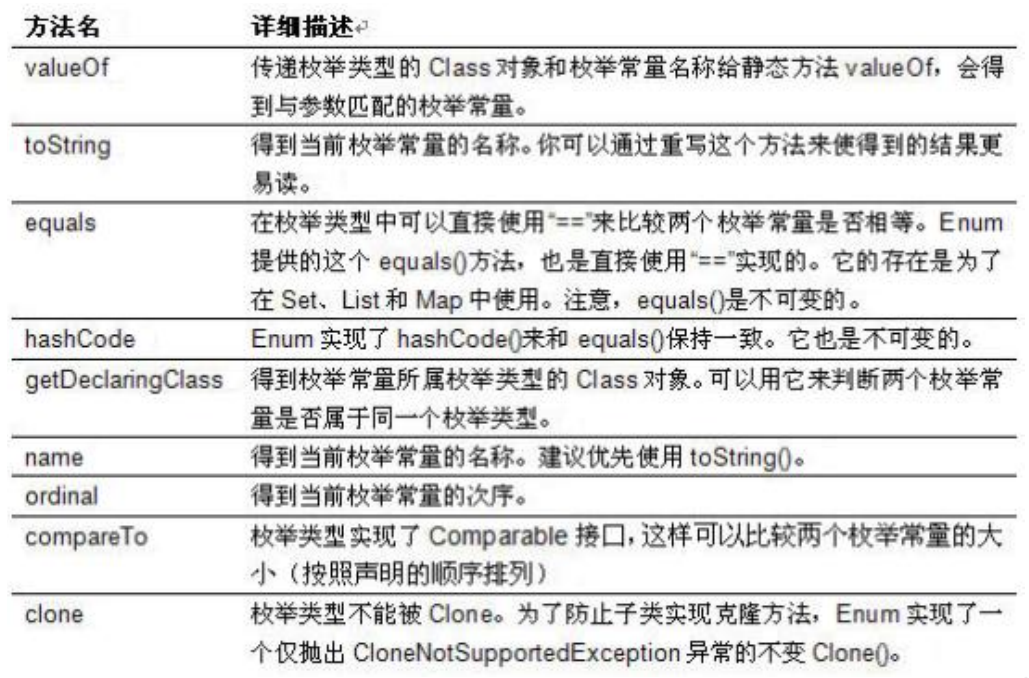
values():返回枚举类型的对象数组,该方法可以很方便地遍历枚举类的所有的枚举值。1
2
3
4
5
6
7
8public class Test {
public static void main(String[] args) {
Thread.State[] values = Thread.State.values();
for (Thread.State value : values) {
System.out.print(value + " ");// NEW RUNNABLE BLOCKED WAITING TIMED_WAITING TERMINATED
}
}
}valueOf(String str):可以把一个字符串转为对应的枚举类对象。要求字符串必须是枚举类对象的 “名字”,如不是,会抛出运行时异常:java.lang.IllegalArgumentException。1
2
3
4
5
6
7
8public class Test {
public static void main(String[] args) {
Thread.State aNew = Thread.State.valueOf("NEW");
System.out.println(aNew);// NEW
Thread.State dead = Thread.State.valueOf("DEAD");
System.out.println(dead);// java.lang.IllegalArgumentException: No enum constant java.lang.Thread.State.DEAD
}
}toString():返回当前枚举类对象常量的名称。
使用 enum 关键字定义的枚举类实现接口的情况:
和普通 java 类一样,枚举类可以实现一个或多个接口。
若每个枚举值在调用实现的接口的方法时,如果呈现出相同的行为方式,则只要统一实现该方法即可。
1
2
3
4
5
6
7
8
9
10
11
12
13
14
15
16
17
18
19
20
21
22
23
24
25
26
27
28
29
30
31
32
33
34
35
36
37
38
39
40
41
42
43
44
45
46
47
48
49
50
51
52
53
54
55
56public class Test {
public static void main(String[] args) {
Season spring = Season.SPRING;
spring.show();// 这是一个季节
}
}
interface Info {
void show();
}
// 使用enum关键字定义枚举类
enum Season implements Info {
// 1.首行提供当前枚举类的多个对象: 多个对象之间以","隔开,末尾的对象以";"结束
SPRING("春天", "春暖花开"),
SUMMER("夏天", "夏日炎炎"),
AUTUMN("秋天", "秋高气爽"),
WINTER("冬天", "白雪皑皑");
// 2.声明Season对象的属性:private final 修饰 --- 常量
private final String SEASONNAME;//季节的名称
private final String SEASONDESC;//季节的描述
// 3.私有化类的构造器,并给对象的属性赋值
private Season(String seasonName, String seasonDesc) {
this.SEASONNAME = seasonName;
this.SEASONDESC = seasonDesc;
}
// 4.其他诉求一:获取枚举类对象的属性
public String getSEASONNAME() {
return SEASONNAME;
}
public String getSEASONDESC() {
return SEASONDESC;
}
// 每个枚举值在调用实现的接口的方法时,呈现出相同的行为方式
public void show() {
System.out.println("这是一个季节");
}
// 5.其他诉求二:提供toString(),一般不重写
/*@Override
public String toString() {
return "Season{" +
"SEASONNAME='" + SEASONNAME + '\'' +
", SEASONDESC='" + SEASONDESC + '\'' +
'}';
}*/
}若需要每个枚举值在调用实现的接口的方法时,呈现出不同的行为方式,则可以让每个枚举值分别来实现该方法。
1
2
3
4
5
6
7
8
9
10
11
12
13
14
15
16
17
18
19
20
21
22
23
24
25
26
27
28
29
30
31
32
33
34
35
36
37
38
39
40
41
42
43
44
45
46
47
48
49
50
51
52
53
54
55
56
57
58
59
60
61
62
63
64
65
66
67
68
69
70
71
72public class Test {
public static void main(String[] args) {
Season spring = Season.SPRING;
spring.show();// 现在是春天
Season winter = Season.WINTER;
winter.show();// 现在是冬天
}
}
interface Info {
void show();
}
// 使用enum关键字定义枚举类
enum Season implements Info {
// 1.首行提供当前枚举类的多个对象: 多个对象之间以","隔开,末尾的对象以";"结束
SPRING("春天", "春暖花开") {
public void show() {
System.out.println("现在是春天");
}
},
SUMMER("夏天", "夏日炎炎") {
public void show() {
System.out.println("现在是夏天");
}
},
AUTUMN("秋天", "秋高气爽") {
public void show() {
System.out.println("现在是秋天");
}
},
WINTER("冬天", "白雪皑皑") {
public void show() {
System.out.println("现在是冬天");
}
};
// 2.声明Season对象的属性:private final 修饰 --- 常量
private final String SEASONNAME;//季节的名称
private final String SEASONDESC;//季节的描述
// 3.私有化类的构造器,并给对象的属性赋值
private Season(String seasonName, String seasonDesc) {
this.SEASONNAME = seasonName;
this.SEASONDESC = seasonDesc;
}
// 4.其他诉求一:获取枚举类对象的属性
public String getSEASONNAME() {
return SEASONNAME;
}
public String getSEASONDESC() {
return SEASONDESC;
}
// 5.其他诉求二:提供toString(),一般不重写
/*@Override
public String toString() {
return "Season{" +
"SEASONNAME='" + SEASONNAME + '\'' +
", SEASONDESC='" + SEASONDESC + '\'' +
'}';
}*/
}
注解 (Annotation) 的使用
注解的概述:
- 从 jdk 5.0 开始,java 增加了对元数据 (MetaData) 的支持,也就是 Annotation (注解)。
- Annotation 其实就是代码里的特殊标记,这些标记可以在编译、类加载、运行时被读取,并执行相应的处理。通过使用 Annotation,程序员可以在不改变原有逻辑的情况下,在源文件中嵌入一些补充信息。代码分析工具、开发工具和部署工具可以通过这些补充信息进行验证或者进行部署。
- Annotation 可以像修饰符一样被使用,可用于修饰包、类、构造器、方法、 成员变量、参数、局部变量的声明,这些信息被保存在 Annotation 的 “name = value” 对中。
- 在 JavaSE 中,注解的使用目的比较简单,例如标记过时的功能,忽略警告等。在 JavaEE/Android 中注解占据了更重要的角色,例如用来配置应用程序的任何切面,代替 JavaEE 旧版中所遗留的繁冗代码和 XML 配置等。
- 未来的开发模式都是基于注解的,JPA 是基于注解的,Spring 2.5 以上都是基于注解的,Hibernate 3.x 以后也是基于注解的,现在的 Struts2 有一部分也是基于注解的。注解是一种趋势,一定程度上可以说:框架 = 注解 + 反射 + 设计模式。
常见的 Annotation 示例:
使用 Annotation 时要在其前面增加 @ 符号,并把该 Annotation 当成一个修饰符使用,用于修饰它支持的程序元素。
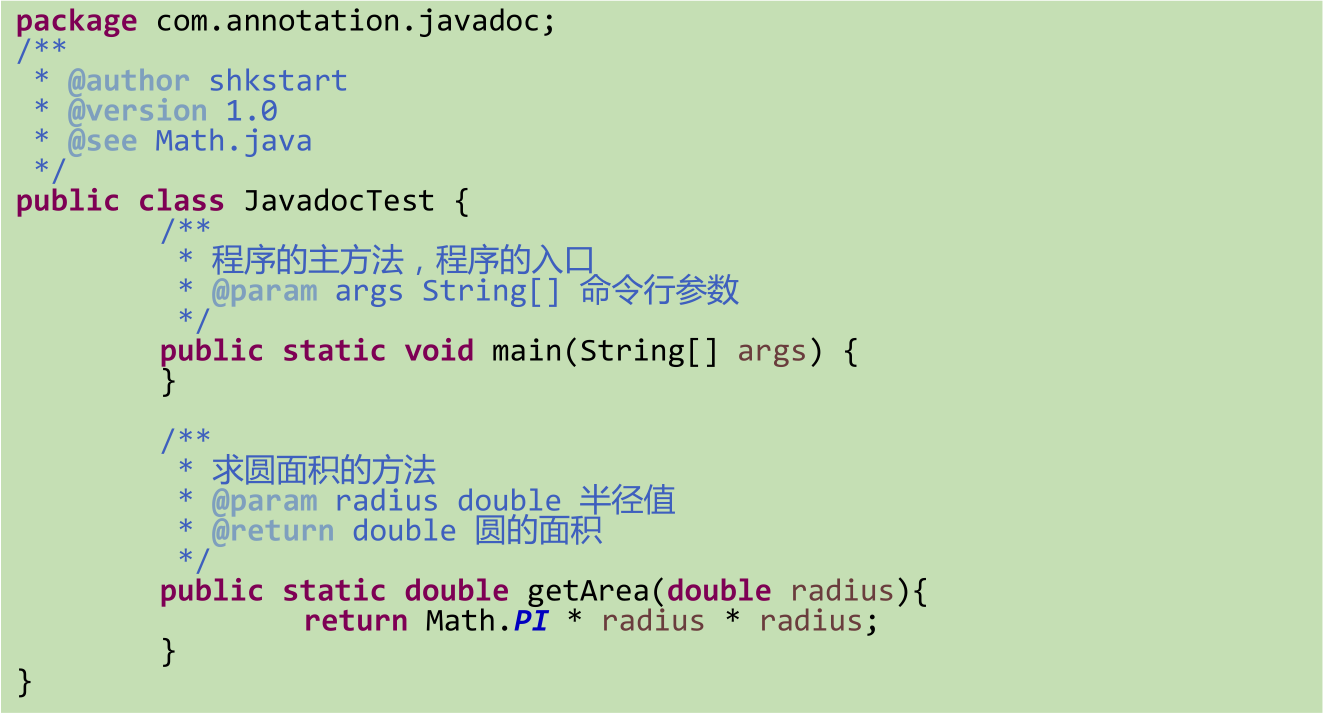
示例一:生成文档相关的注解。
@author:标明开发该类模块的作者,多个作者之间使用 “,”分割。@version:标明该类模块的版本。@see:参考转向,也就是相关主题。@since:从哪个版本开始增加的。@param:对方法中某参数的说明,如果没有参数就不能写。@return:对方法返回值的说明,如果方法的返回值类型是 void 就不能写。@exception:对方法可能抛出的异常进行说明 ,如果方法没有用 throws 显式抛出的异常就不能写其中。@param、@return和@exception这三个标记都是只用于方法的。@param的格式要求:@param 形参名 形参类型 形参说明。@return的格式要求:@return 返回值类型 返回值说明。@exception的格式要求:@exception 异常类型 异常说明。@param和@exception可以并列多个。
实例:
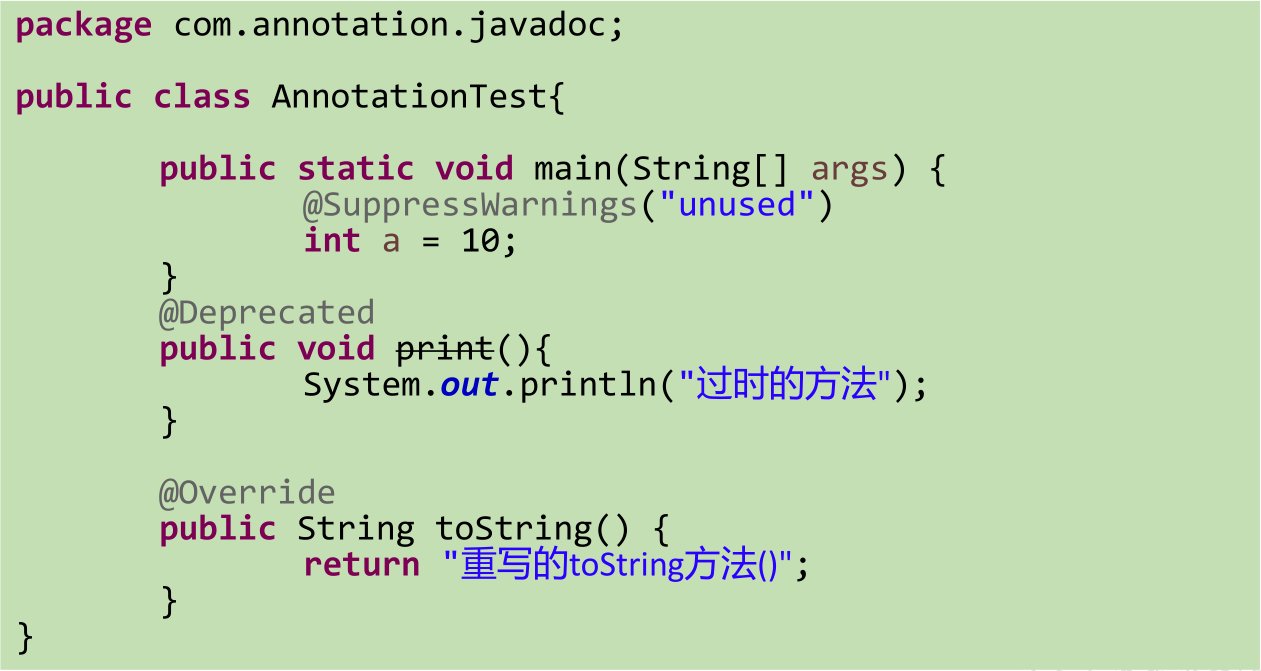
示例二: 在编译时进行格式查 (jdk 内置的三个基本注解)。
@Override:限定重写父类方法,该注解只能用于方法。@Deprecated:用于表示所修饰的元素 (类,方法等) 已过时,通常是因为所修饰的结构危险或存在更好的选择。@SuppressWarnings:抑制编译器警告。实例:
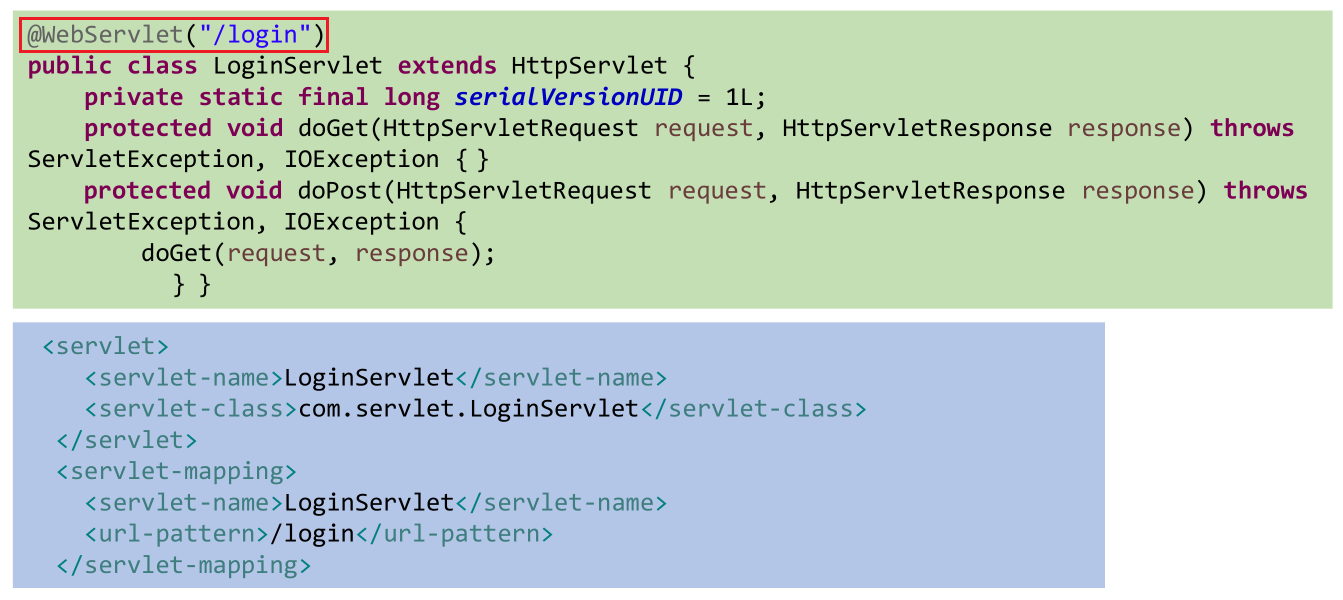
示例三: 跟踪代码依赖性,实现替代配置文件功能。
Servlet 3.0 提供了注解 (annotation),使得不再需要在 web.xml 文件中进行 Servlet 的部署:
spring 框架中关于事务的管理:
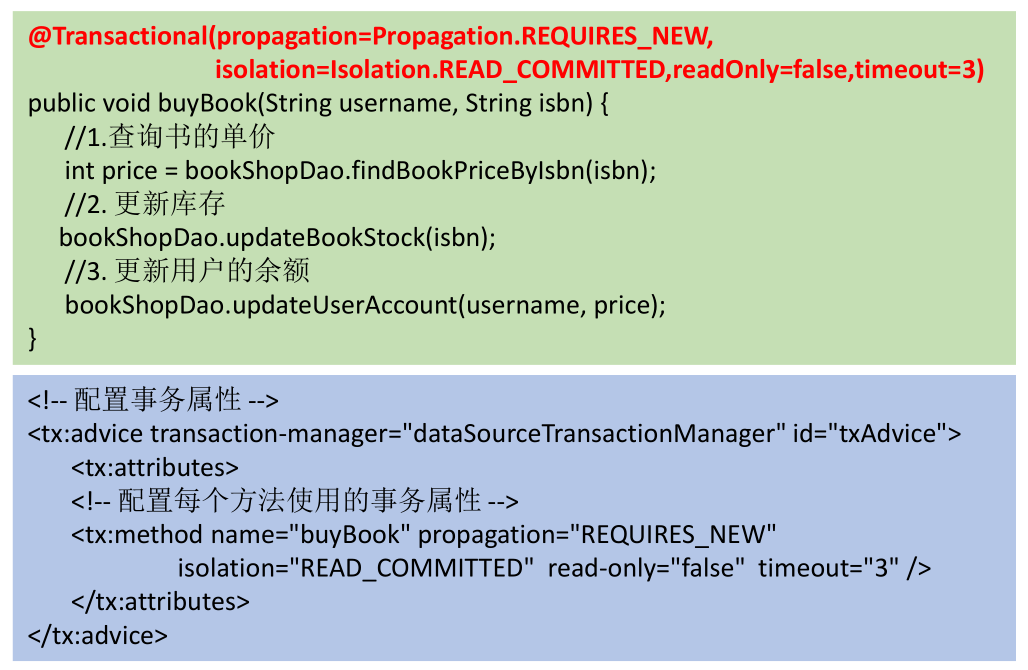
自定义注解:参照 @SuppressWarnings定义。
注解声明为:
@interface。自定义注解自动继承了
java.lang.annotation.Annotation接口。Annotation 的成员变量在 Annotation 定义中以无参数方法的形式来声明。其方法名和返回值定义了该成员的名字和类型,我们称为配置参数。类型只能是八种基本数据类型、String 类型 、Class 类型 、Enum 类型 、Annotation 类型,以上所有类型的数组。
可以在定义 Annotation 的成员变量时为其指定初始值,指定成员变量的初始值可使用 default 关键字。
没有成员定义的 Annotation 称为标记 (是一个标识作用);包含成员变量的 Annotation 称为元数据 Annotation。
如果注解只有一个成员,建议使用参数名为 value。
如果注解有成员,那么使用时必须指定参数值,除非它有默认值。格式是 “参数名 = 参数值”,如果只有一个参数成员,且名称为 value,可以省略 “value=”,直接写参数值。
自定义注解必须配上注解的信息处理流程才有意义 (使用反射,能够得到注解的内容,然后根据内容和注解的对象建立关系,比如 Servlet 的注解)。
实例:
1
2
3public MyAnnotation {
String[] value() default "自定义的注解";
}
jdk 中的元注解:
jdk 的元注解是用于修饰其他注解而定义的,即对现有注解进行解释说明的注解。
- 元数据:对数据进行修饰的数据。比如:
String name = "Tom";,Tom 是数据,而 String 和 name 就是修饰 Tom 的元数据。
- 元数据:对数据进行修饰的数据。比如:
jdk 5.0 提供了 4 个标准的 meta-annotation 类型,分别是:
@Retention:只能用于修饰一个 Annotation 定义,用于指定该 Annotation 的生命周期。@Rentention包含一个 RetentionPolicy 类型的成员变量,使用@Rentention时必须为该 value 成员变量指定值:1
2
3
4
5
6
7
8
9
10
public Retention {
/**
* Returns the retention policy.
* @return the retention policy
*/
RetentionPolicy value();
}1
2
3
4
5
6
7
8
9
10
11
12
13
14
15
16
17
18
19
20
21public enum RetentionPolicy {
/**
* Annotations are to be discarded by the compiler.
*/
SOURCE,
/**
* Annotations are to be recorded in the class file by the compiler
* but need not be retained by the VM at run time. This is the default
* behavior.
*/
CLASS,
/**
* Annotations are to be recorded in the class file by the compiler and
* retained by the VM at run time, so they may be read reflectively.
*
* @see java.lang.reflect.AnnotatedElement
*/
RUNTIME
}RetentionPolicy.SOURCE:在源文件中有效,即源文件保留,编译器直接丢弃这种策略的注释。RetentionPolicy.CLASS:在 class 文件 中有效,即 class 保留,当运行 java 程序时,JVM 不会保留注解。这是默认值。RetentionPolicy.RUNTIME:在运行时有效,即运行时保留,当运行 java 程序时,JVM 会保留注释。程序可以通过反射获取该注释。只有声明为 RUNTIME 生命周期的注解,才能通过反射获取。
实例:
1
2
3
4
public MyAnnotation {
String[] value() default "自定义的注解";
}.jpg)
@Target:用于修饰 Annotation 定义,用于指定被修饰的 Annotation 能用于修饰哪些程序元素。 @Target 也包含一个名为 value 的成员变量。1
2
3
4
5
6
7
8
9
10
11
12
public Target {
/**
* Returns an array of the kinds of elements an annotation type
* can be applied to.
* @return an array of the kinds of elements an annotation type
* can be applied to
*/
ElementType[] value();
}1
2
3
4
5
6
7
8
9
10
11
12
13
14
15
16
17
18
19
20
21
22
23
24
25
26
27
28
29
30
31
32
33
34
35
36
37
38
39public enum ElementType {
/** Class, interface (including annotation type), or enum declaration */
TYPE,
/** Field declaration (includes enum constants) */
FIELD,
/** Method declaration */
METHOD,
/** Formal parameter declaration */
PARAMETER,
/** Constructor declaration */
CONSTRUCTOR,
/** Local variable declaration */
LOCAL_VARIABLE,
/** Annotation type declaration */
ANNOTATION_TYPE,
/** Package declaration */
PACKAGE,
/**
* Type parameter declaration
*
* @since 1.8
*/
TYPE_PARAMETER,
/**
* Use of a type
*
* @since 1.8
*/
TYPE_USE
}各取值含义如下:
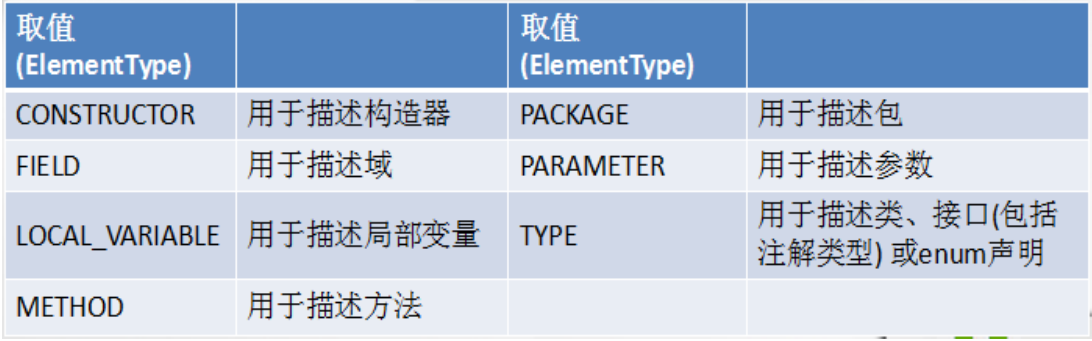
实例:
1
2
3
4
5
6
7
8
9
10
public MyAnnotation {
String[] value() default "自定义的注解";
}
class Person {
public Person() {
}
}
@Documented:用于指定被该元 Annotation 修饰的 Annotation 类将被 javadoc 工具提取成文档。默认情况下,javadoc 是不包括注解的。如果希望一个注解在被 javadoc 解析生成文档时能保存下来,需要添加此注解。1
2
3
4
5
public Documented {
}- 定义为
@Documented的注解,必须设置@Retention值为 RUNTIME。
- 定义为
@Inherited:被它修饰的 Annotation 将具有继承性。如果某个类使用了被@Inherited修饰的 Annotation,则其子类将自动具有该注解。- 比如:如果把标有
@Inherited注解的自定义的注解标注在类级别上,子类则可以继承父类类级别的注解。 - 实际应用中,使用较少。
- 比如:如果把标有
自定义注解时,通常都会指明
@Retention和@Target这两个注解。
利用反射获取注解信息:
jdk 5.0 在
java.lang.reflect包下新增了 AnnotatedElement 接口,该接口代表程序中可以接受注解的程序元素。当一个 Annotation 类型被定义为运行时 Annotation 后,该注解才是运行时可见,当 class 文件被载入时保存在 class 文件中的 Annotation 才会被虚拟机读取。
程序可以调用 AnnotatedElement 对象的如下方法来访问 Annotation 信息:
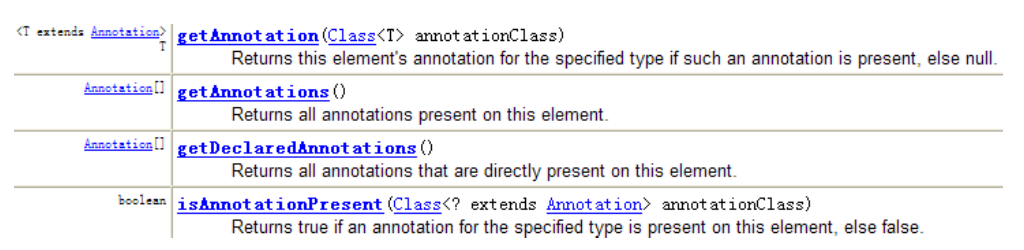
实例:
1
2
3
4
5
6
7
8
9
10
11
12
13
14
15
16
17
18
19
20
21
22
23
24
25
26
public MyAnnotation {
String[] value() default "自定义的注解";
}
class Person {
public Person() {
}
public static void main(String[] args) {
Class<Person> clazz = Person.class;
Annotation[] annotations = clazz.getAnnotations();
for (Annotation annotation : annotations) {
System.out.println(annotation);// @cn.xisun.java.base.MyAnnotation(value=[修改了默认值])
}
Annotation annotation = clazz.getAnnotation(MyAnnotation.class);
MyAnnotation myAnnotation = (MyAnnotation) annotation;
String[] info = myAnnotation.value();
System.out.println(Arrays.toString(info));// [修改了默认值]
}
}
jdk 8.0 中注解的新特性:
java 8.0 对注解处理提供了两点改进:可重复的注解及可用于类型的注解。此外,反射也得到了加强,在 java 8.0 中能够得到方法参数的名称。这会简化标注在方法参数上的注解。
可重复注解:
jdk 8.0 之前的写法:
1
2
3
4
5
6
7
8
9
10
11
12
13
14
15
16
17
18
19
20
21
22
23
24
25
26
27
28
29
30
31
32
33
34
35
36
public MyAnnotation {
String[] value() default "自定义的注解";
}
// 定义新数组,值为需要重复注解对象的数组
MyAnnotations {
MyAnnotation[] value();
}
// jdk 8.0之前的写法:
class Person {
public Person() {
}
public static void main(String[] args) {
Class<Person> clazz = Person.class;
Annotation[] annotations = clazz.getAnnotations();
for (Annotation annotation : annotations) {
System.out.println(annotation);
}
Annotation annotation = clazz.getAnnotation(MyAnnotations.class);
MyAnnotations myAnnotation = (MyAnnotations) annotation;
MyAnnotation[] info = myAnnotation.value();
System.out.println(Arrays.toString(info));
}
}
输出结果:
.xisun.java.base.MyAnnotations(value=[.xisun.java.base.MyAnnotation(value=[注解1]), .xisun.java.base.MyAnnotation(value=[=注解2])])
[.xisun.java.base.MyAnnotation(value=[注解1]), .xisun.java.base.MyAnnotation(value=[注解2])]jdk 8.0 之后的写法:利用
@Repeatable。1
2
3
4
5
6
7
8
9
10
11
12
13
14
15
16
17
18
19
20
21
22
23
24
25
26
27
28
29
30
31
32
33
34
public MyAnnotation {
String[] value() default "自定义的注解";
}
MyAnnotations {
MyAnnotation[] value();
}
class Person {
public Person() {
}
public static void main(String[] args) {
Class<Person> clazz = Person.class;
Annotation[] annotations = clazz.getAnnotations();
for (Annotation annotation : annotations) {
System.out.println(annotation);// @cn.xisun.java.base.MyAnnotation(value=[修改了默认值])
}
Annotation annotation = clazz.getAnnotation(MyAnnotations.class);
MyAnnotations myAnnotation = (MyAnnotations) annotation;
MyAnnotation[] info = myAnnotation.value();
System.out.println(Arrays.toString(info));// [修改了默认值]
}
}
类型注解:
jdk 8.0 之后,关于元注解
@Target的参数类型 ElementType 枚举值多了两个:TYPE_PARAMETER 和 TYPE_USE。、ElementType.TYPE_PARAMETER:表示该注解能写在类型变量的声明语句中,如:泛型声明。1
2
3
4
5
6
7
8
9public class TestTypeDefine<@TypeDefine() U> {
private U u;
public < T> void test(T t){
}
}
TypeDefine{
}ElementType.TYPE_USE:表示该注解能写在使用类型的任何语句中。1
2
3
4
5
6
7
8
9
10
11
12
13
14
15
16
17
18
19
20
MyAnnotation {
}
public class AnnotationTest<U> {
private String name;// 对属性添加注解
public static < T> void method(T t) {}// 对泛型添加注解
public static void test( String arg) throws @MyAnnotation Exception {}// 对异常添加注解
public static void main(String[] args) {
AnnotationTest< String> t = null;
int a = ( int) 2L;
int b = 10;
}
}
在 java 8.0 之前,注解只能是在声明的地方所使用,从 java 8.0 开始,注解可以应用在任何地方。
本文参考
https://www.gulixueyuan.com/goods/show/203?targetId=309&preview=0
声明:写作本文初衷是个人学习记录,鉴于本人学识有限,如有侵权或不当之处,请联系 wdshfut@163.com。